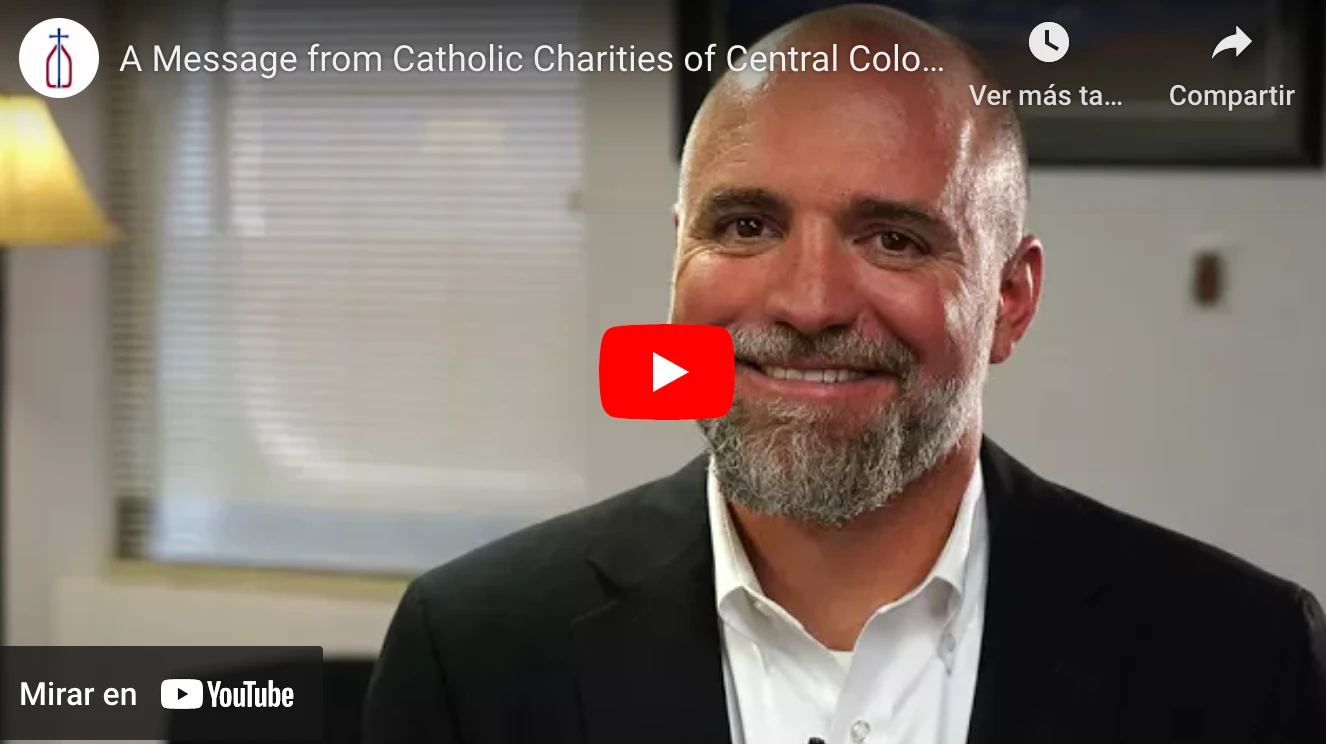




BY ANDY BARTON
On August 20th, Catholic Charities celebrated the grand opening of Hunt Family Housing, a 24-unit facility that will provide stable housing for families exiting homelessness. This project, which began in January 2022, became a reality due to the generous support of hundreds of donors as well as funding from the State of Colorado. As proud and excited as we are by this accomplishment, at the end of the day, Hunt Family Housing is just a building. The work that we will do with the families who live in that building is where the transformational change will occur.
Our approach has been formed by over two years of researching best practices and is grounded in both the timeless wisdom of Catholic Social Teaching and the rigorous insights of evidence-based practices. As we prepare to welcome families into Hunt Family Housing, I want to share why our four-pillar model represents not merely a best practice, but a faithful response to Christ’s call to serve “the least of these” with excellence and compassion.
Pillar One: Dedicated Case Management as the Foundation
Intensive case management forms the cornerstone of effective family support. Studies show that families receiving dedicated case management services realize dramatically improved outcomes compared to those receiving standard services. Our case managers (which we call Life Coaches) at Hunt Family Housing will maintain low caseloads, enabling them to provide the intensive, relationship-based support that is critical to success. This approach recognizes that homelessness is rarely about housing alone; it involves complex interactions between economic hardship, trauma, health challenges, and systemic barriers that require skilled, sustained intervention to address effectively.
Pillar Two: Behavioral Health Services as Essential Medicine
The behavioral health needs of families experiencing homelessness are both profound and often overlooked. Research indicates that homeless children face heightened challenges from trauma, mental illness, and behavioral problems, while their parents struggle with their own mental health issues, often compounded by histories of domestic violence and trauma. This research informed our decision to provide dedicated behavioral health therapists for each family, ensuring that mental health support is not an afterthought but an integral component of the healing process.
Pillar Three: Parent Education as Empowerment
Effective parenting requires skills that many parents, particularly those facing the stress of homelessness, may never have had the opportunity to develop. Research has found that parent education programs can build resilience in families experiencing homelessness by enhancing parental health literacy, sensitive parenting behaviors, and child self-regulation.
The evidence for parent education’s effectiveness is particularly strong when services are delivered in supportive environments. Studies show that home visiting programs—which share many characteristics with our on-site parent education services—effectively increase positive child health indicators, improve parenting skills, decrease risks of abuse and neglect, and reduce parental depression.
Pillar Four: Trauma-Informed Architecture as Healing Environment
The physical environment profoundly impacts healing and recovery, particularly for individuals who have experienced trauma. The emerging field of trauma-informed design recognizes that the built environment can either support or hinder therapeutic progress. For families who have experienced the trauma of homelessness, the design of their living space becomes an essential component of their recovery.
The renovation of Helen Hunt Elementary School incorporates these principles throughout. High ceilings and large windows provide natural light and visual connections to the outdoors. Individual family units offer privacy and control, while common areas encourage community building. The preservation of the building’s historic character provides identity anchors that research identifies as important for psychological well-being.
This four-pillar model represents more than a service delivery framework; it embodies our fundamental conviction that every person possesses inherent dignity as a child of God. Catholic Charities’ mission calls us to create conditions where all people can “fully achieve their God-given potential.” When families receive comprehensive, coordinated support addressing their housing, mental health, parenting, and environmental needs, this transformation becomes not just possible but predictable.
When we serve the poor with excellence, we encounter Christ himself. The four-pillar model at Hunt Family Housing will transform not just housing situations but entire family trajectories, bearing witness to the Gospel truth that no one is disposable, and every life is valuable. In this way, we aim to end family homelessness, one sacred encounter at a time.
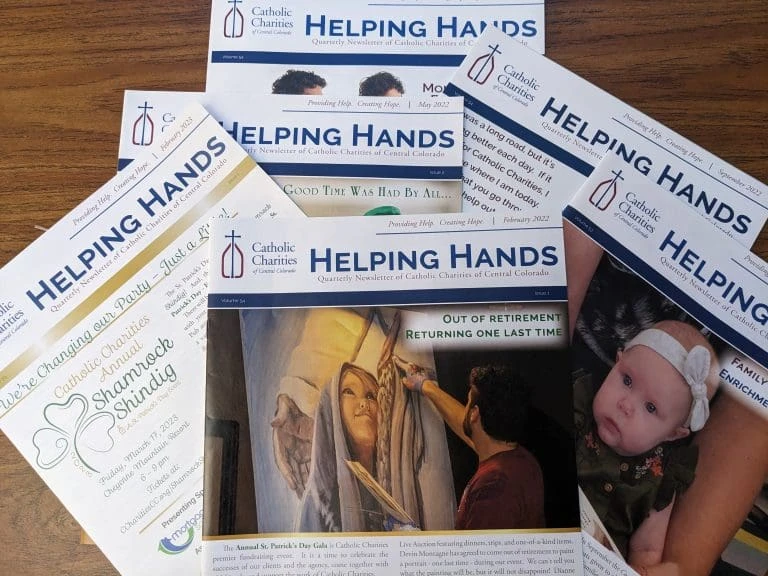
Andy Barton is the President and CEO of Catholic Charities of Central Colorado. This article first appeared in the September issue of Helping Hands Newsletter.

Leave a Reply