


Arthur Jones, an Australian-born sociologist and former editor of Fortune Magazine, once posited, “All organizations are perfectly designed to get the results they get.” Henry Ford put it another way: “If you always do what you’ve always done, you’ll always get what you’ve always got.” Regardless of which maxim you prefer, the point is that progress comes from change.
There is plenty to suggest that the work of Catholic Charities over the past two years has been positive and successful. We can point to the number of people who have received hot meals, the families who have avoided eviction, and the children who have grown up in better situations, as a result of the people—staff, volunteers, and donors—who support the work. Yet if we keep doing the same thing, our outcomes will invariably diminish because poverty is a complex problem, constantly changing in response to countless variables that are unique to each individual who experiences hardship.
Managing a complex problem requires changing the approach regularly. That is why the Catholic Charities Board of Directors approved a new plan for the agency this past August that reimagines the way we go about this work. While our overarching goal remains, as always, to reduce the impact of poverty throughout our community, our new strategic plan outlines a comprehensive approach to enhance its service delivery, organizational effectiveness, and community impact. The plan is structured around three key strategic drivers:
- Focus on those we serve: We are committed to providing supportive, trauma-informed services to empower individuals experiencing poverty to achieve greater stability for themselves and their families. While we will continue to provide crisis relief with daily meals, food, cold weather shelter, and items like diapers and formula for children, more emphasis will be placed on building resiliency and stability. Case management, also known as life coaching, offers a transformational relationship that supports people over time rather than in a single transaction. Finally, we will continue to expand our capacity to provide access to health and wellness services as well as housing to address two of the major systemic issues facing our poor and vulnerable.
- Empower our people: Our staff and volunteers are our most valuable resource. By empowering and supporting them to exceptionally serve our clients, we greatly improve our ability to respond to complex issues. This means recruiting and hiring skilled staff aligned with Catholic Social Teaching while improving retention through professional growth opportunities and a supportive work culture. We also envision a deeper connection to our faith-based mission as a way of empowering staff and volunteers, echoing Pope Francis’ sentiment in his encyclical Deus Caritas Est (God is Love): “These charity workers… need to be led to that encounter with God in Christ which awakens their love and opens their spirits to others.”
- Strengthen operational capacity: We will focus on improving communication, leveraging technology, and developing robust funding mechanisms. By enhancing internal and external communication, we hope to bring awareness to both people in need of our services and those who want to support the work. Technology plays a significant role in communication and offers untapped opportunities to better serve our clients. By actively engaging and investing in technological advancements, we will help our people do their work more effectively and better assist those they are serving.
This strategic plan emphasizes a holistic approach to serving the community, with a strong focus on staff development, client empowerment, and operational efficiency. By implementing these new strategies, we aim to strengthen our ability to fulfill our mission and create lasting positive impact in the lives of those we serve. For those men, women, and children facing the cruelty of poverty, the ability of Catholic Charities to strategically evolve and change will be a source of help and hope.
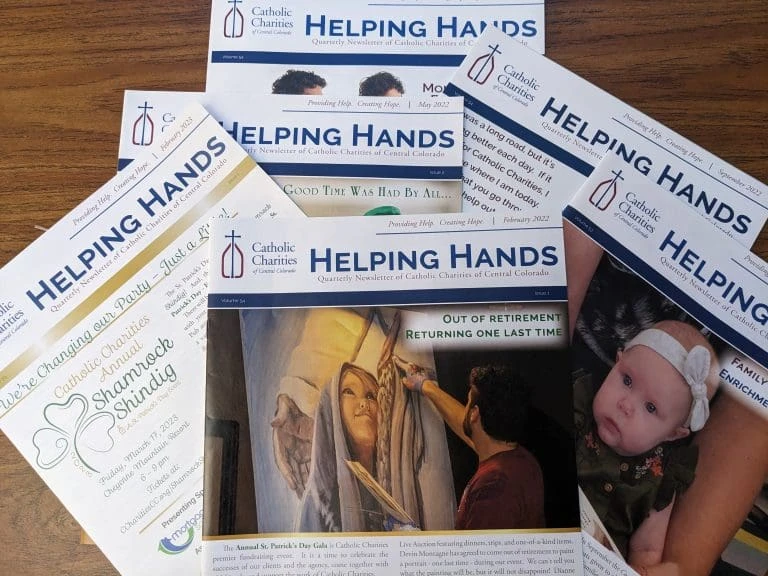
Andy Barton is the President and CEO of Catholic Charities of Central Colorado. This column was first published in the Dec 1, 2024 issue of Helping Hands quarterly newsletter.
Leave a Reply