

BY CATHERINE DUARTE, AICP
PLACES: Reinvesting without displacing
Part 2 of a series on the 2025 City of Colorado Springs and El Paso County Regional Housing Needs Assessment (HNA) and ways to create affordability through housing justice.
While neighborhoods and cities see residents—owners and renters alike—come and go through the years, there is a phenomenon altogether unique from organic, voluntary moves: displacement. Displacement is involuntary and happens when a household is forced to move due to external pressures. It can be direct, such as an eviction, a natural disaster, or sale of one’s building, or it can be indirect, such as when rent or property taxes rise to a point where people are priced out.
As our region grows, large redevelopment projects and demand for existing housing have contributed to rising property values in “up and coming” neighborhoods. This is a welcome boon for many owners and investors who have been waiting to sell, but it creates incredible burden for everyone else: low-income homeowners, renters, small business owners who lease their space, first-time homebuyers, area employees who want to live in same neighborhood where they work.
This is often the tension fueling neighborhood backlash to big reinvestment projects or luxury private developments. In most communities, signs of neighborhood improvements signal to current residents that their days of being able to afford living there are numbered. This reaction is not just based on emotion; history and data show that likelihood of displacement is real.
Scale of risk
Too many Colorado Springs residents live in fear of being priced out of their communities, and we can finally see the scale of this problem in the 2025 Housing Needs Assessment. In its “Displacement Risk by Census Tract” map (Fig. 69, pg. 137), tracts are colored from light blue (low risk) to dark purple (high risk). In the map, there is a sea of dark purple covering central and Southeast Colorado Springs neighbors, indicating that they face the highest risk of displacement. What is most notable is that almost every single Census tract in El Paso County has a risk factor higher than the lowest shade on the scale.
Displacement Risk by Census Tract
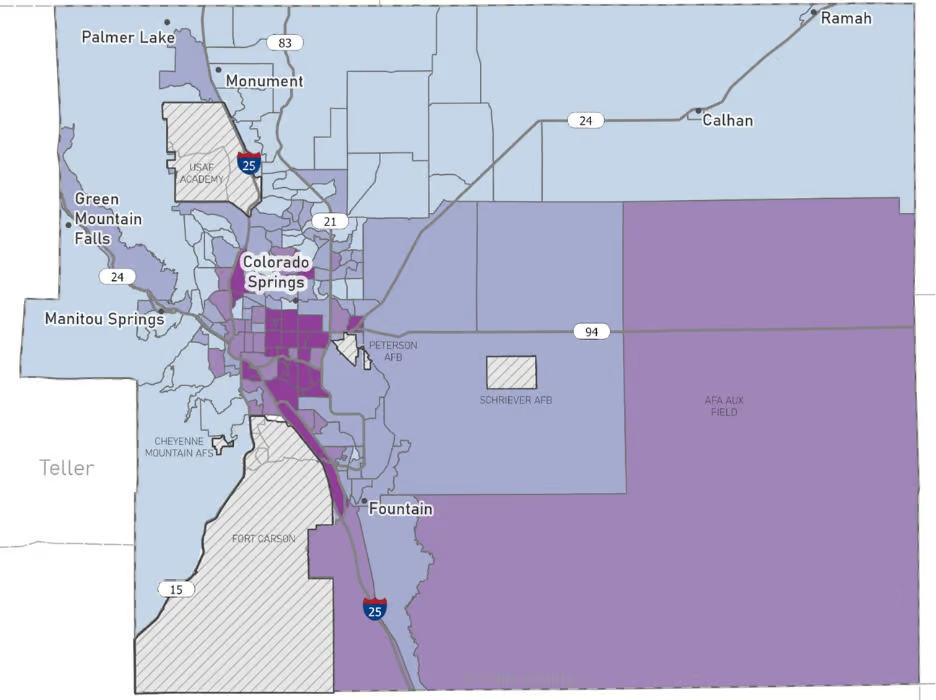
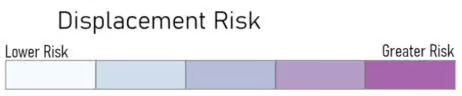
Data source: 2023 American Community Survey
You may think this is why more supply is good – more houses mean more options. While increasing housing supply is necessary and does add more units, because of the high (and rising) cost of new construction and the current lack of resources to repair aging housing stock, the loss of existing affordability diminishes the gains by half in Colorado. In other words, when we only focus on building homes for future residents without preserving affordability for current residents, we have traded one housing problem for another. Without thoughtful policies to preserve existing housing and provide protections for current residents at risk of being uprooted, the damage will last generations.
Evidence of recent displacement
We see evidence of displacement over the last decade in the decrease of poverty rates in Colorado Springs, the increase of poverty in the unincorporated areas of El Paso County, and the increase in commuters coming from the county into the city. In other words, low-income households are leaving the city for a more affordable home but now drive farther to and from work every day.
One social cost of people having to move far from their jobs is more cars on the road, straining public resources and creating heavier traffic. On the household level, the added car maintenance and fuel costs devour any savings gained from cheaper housing. There are also compounding physical and mental health effects of long commutes. Research shows that longer commutes lead to negative health and financial outcomes for workers.
More importantly, displacement can be a traumatic experience for people. Studies show that long-term effects of displacement include depression, continued housing instability, and disrupted social bonds.
Most troubling is what our collective acceptance of displacement as the natural result of growth says about our values. It says that we only deem high earners as worthy of living here (or anywhere!) long-term. It says that renters—nearly half of the City’s population—do not deserve to establish roots in their community.
When we accept that reinvestment and redevelopment must come at the expense of ever-rising housing costs, we are telling half of our neighbors that they are expendable, just placeholders for future wealthier residents.
A housing justice approach
A central tenet of Catholic Social Teaching is subsidiarity, or the belief that decision-making must start at the most local levels in the interest of the common good. A key principle of subsidiarity is that those who are directly affected by unjust systems and structures must be part of the decision making, as they have the best insight into changing them.
Growth necessitates change, but we do not have to accept the involuntary exodus of vulnerable neighbors as an inevitable step of growth or redevelopment. Housing justice is confronting the dynamics that enable displacement. It is finding another way of growing without leaving others behind.
We all deserve safe, beautiful neighborhoods where everyone can participate and enjoy the benefits of renewed investment. There is no single policy that will get us there. Preventing displacement and preserving affordability requires many holistic, upstream housing policies. A well-rounded housing policy roster should offer something for everyone: renters, homeowners, first-time homebuyers, mom-and-pop landlords, multifamily property owners, people with disabilities, people who live in group homes, people who want to age in place, small-scale developers, large families, single people, and workers of all incomes.
We must grow inclusively with intention and care, reforming current tools and creating new ones that welcome new residents while ensuring stability for existing ones. This will take a great amount of political will and collaboration between residents and developers. For reasons I will explain in Part 3, I have hope that our community is up for this challenge.
Catherine Duarte is the Sr Vice President of Housing Development at Catholic Charities of Central Colorado.


Leave a Reply