

BY ANDY BARTON
Organizations like Catholic Charities are often referred to as safety nets. That image works because a net catches people before they hit the ground. It keeps the worst from happening. When we provide a meal at the Marian House or motel rooms for families living outside on the coldest winter nights, we do function like a safety net.
The trouble with a net is that catching someone is the whole of its ambition. A net holds you exactly where you landed. It keeps the fall from becoming fatal, which is no small thing, but it has nothing to say about what comes next. If catching people is the only thing we ever do, we should not be surprised to find the same people in the net year after year. We want and need to be more than a net.
In chemistry, a catalyst is a substance that makes a reaction possible, or makes it happen far faster, by lowering the energy that reaction requires. Two things here are worth pointing out. First, the change does not happen in the catalyst; it happens in everything around it. Second, the catalyst is not consumed in the process. When the reaction finishes, it is still there, still capable, ready for the next one.
Scripture got to this long before chemistry did. In Matthew’s 13:33, Jesus says, “The kingdom of heaven is like yeast that a woman took and mixed with three measures of wheat flour until the whole batch was leavened”. How strange to compare the kingdom of heaven to yeast, the ingredient that is invisible in the dough and wildly outmatched by volume. But without it there is no bread, only flour and water. The leaven makes the rising possible.
That distinction applies to charitable work as well. The reality is that we do not transform anyone. The mother who moves her children out of a car and into one of our housing units at Hunt does so on her own. She makes the calls, gets the job and holds herself together on the days when nothing goes right. The role of Catholic Charities is to lower the energy required to make those changes, especially at those moments when it was more than any person could summon alone.
This is what the dignity of the human person demands. The Church has always taught that people are the authors of their own lives, and that help which forgets this diminishes the very person it intends to serve. The catalyst puts the person at the center of their own story and puts us where we belong, at the edge of it, making the difficult thing possible.
To be clear, a catalyst cannot create a reaction when an ingredient is simply missing. We can lower the energy a family needs to secure housing, but we cannot conjure a unit that was never built. That is why we have committed to developing or preserving at least 500 affordable homes across our ten counties over the coming decade. Some gaps close through accompaniment, others close only when someone builds the thing that was never there. For this reason, we will continue to look for gaps and look to fill them.
As a donor or volunteer at Catholic Charities, you are a vital part of this mission. If we are the leaven, you are in the dough. Every gift, every hour volunteered, every conversation in which you refuse to let a neighbor be discussed as a statistic adds to the conditions in which change becomes possible for someone who could not manage it alone. Together, we are the reason our community rises.
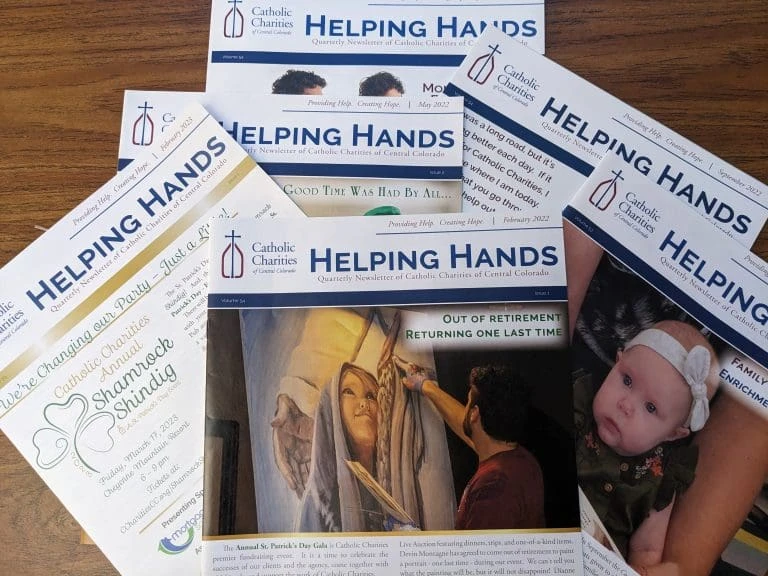
Andy Barton is the CEO of Catholic Charities. This article was first published in the September edition of the Helping Hands Newsletter.

Leave a Reply