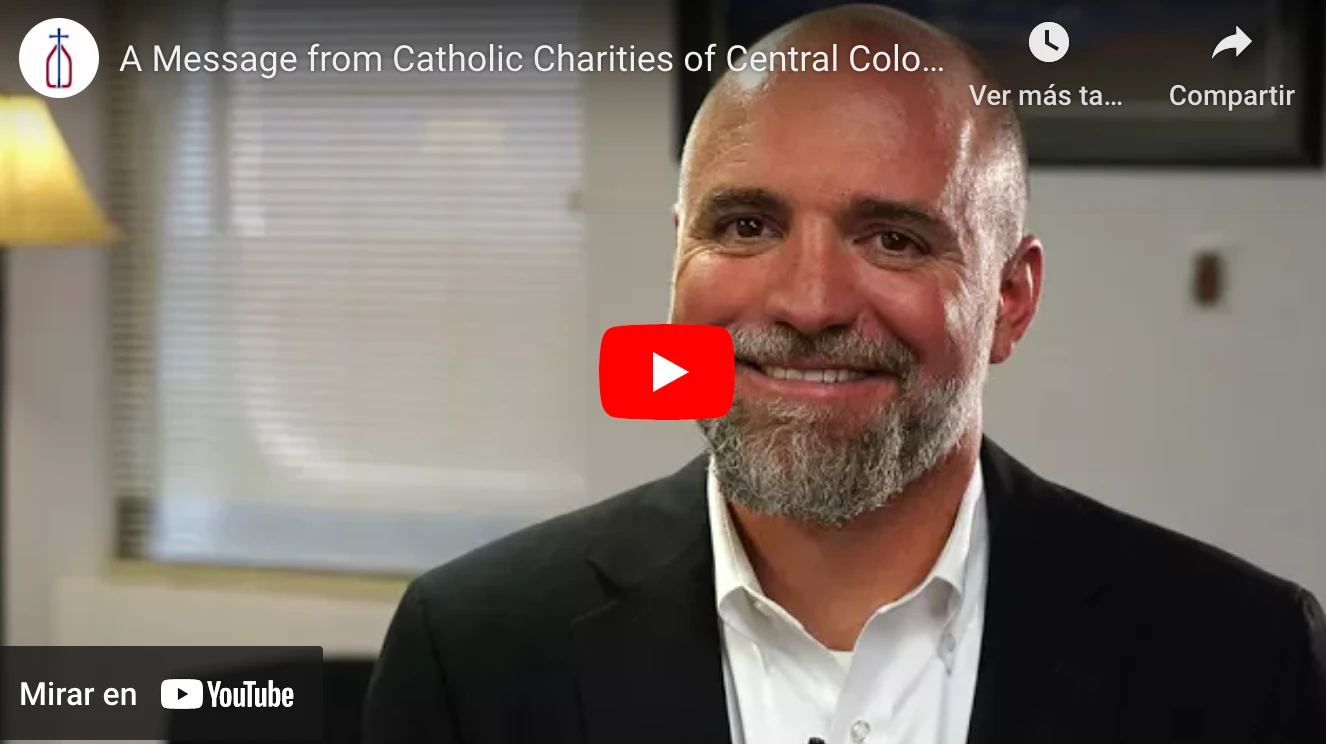



BY ANDY BARTON
Throughout my time with Catholic Charities, I have taken occasional trips to parish communities on the eastern plains and in the mountains, visiting with church and town leaders. One of the characteristics of these towns that inspires me most is how well people care for each other. In Cheyenne Wells a couple of years ago, during a lunch meeting with the Cheyenne County Health Care Coalition, a longtime resident talked about the closeness of their community, relating how unusual it is for her not to know someone she sees when walking downtown, volunteering at the school, or visiting the county fair. I was struck by how that observation compared with the experience someone in Colorado Springs might have walking around downtown, where most of the faces they encounter are unknown, and how that impacts the way we care for each other.
It is worth pausing on the word itself. “Community” comes from the Latin communitas, which derives from communis, meaning “common” or “shared by all.” Dig one layer deeper, and you find munus, an old Latin word for duty, service, or gift. Embedded in the word we use every day is the idea that a group of people who happen to live near each other is bound by mutual obligation. That is a very different thing from proximity, and it helps explain why some towns feel like true communities while some neighborhoods, even crowded ones, do not.
My time in rural communities comes to mind as we continue our work in support of and in solidarity with those in Colorado Springs who are battling homelessness. Recently, much of the attention on this issue has focused on the city ordinance that makes it illegal to camp in cars. This is a challenging issue for all the stakeholders. The reality is that everyone- elected leaders, business owners, service providers, and certainly those men and women who would be affected- wants a better solution than the one we currently have.
In Cheyenne Wells, homelessness is not an issue, yet the community has plenty of experience in assisting people in crisis. On occasion, if a traveler without any money breaks down and has no place to go, the people in town will help find shelter, food, and other resources so the person can continue his or her journey. Similarly, if a family loses their home to a fire or other disaster, neighbors provide a place to stay, set up a bank account, and the community helps rebuild. This incredible response to those in need is not unique to Cheyenne Wells. I have heard similar stories during my visits to Victor, Leadville, Burlington, Stratton, and Limon. In rural communities, individuals work together in unique and beautiful ways.
What makes these communities strong is not their size or their wealth. It is the trust people place in each other, a shared sense of what is owed to a neighbor, and a willingness to show up when someone is in need without waiting to be asked. The elements of trust, shared obligation, and the habit of showing up are the same qualities researchers point to when they study what holds any community together, whether it is a book group, a small town, a parish, or a city. A strong community is one where people still feel that duty embedded in the word itself, the sense that another person’s need is also theirs to answer.
The first letter of John speaks to the continuity between love of neighbor and love of God: “If someone who has worldly means sees a brother in need and refuses him compassion, how can the love of God remain in him? Children, let us love not in word or speech but in deed and truth.” (1 John 3: 17 to 18) I suspect there will never be an ordinance in Cheyenne Wells that outlaws sleeping in cars, not because of legal or civil-rights objections, but because the community would take care of it. In Colorado Springs, the scale may be larger, but our resolve should be the same. As we work on different solutions, we would be well served to remember and embrace the words in John’s letter. As children of God, our focus should always be on how we care for our neighbors, wherever we encounter them. We are, as a community, inextricably bound to each other.
Andy Barton is the CEO of Catholic Charities of Central Colorado. This article was first published in the August 2026 issue of The Herald

Leave a Reply